




Fishing in Dubrovnik: What Lives Below the Walls
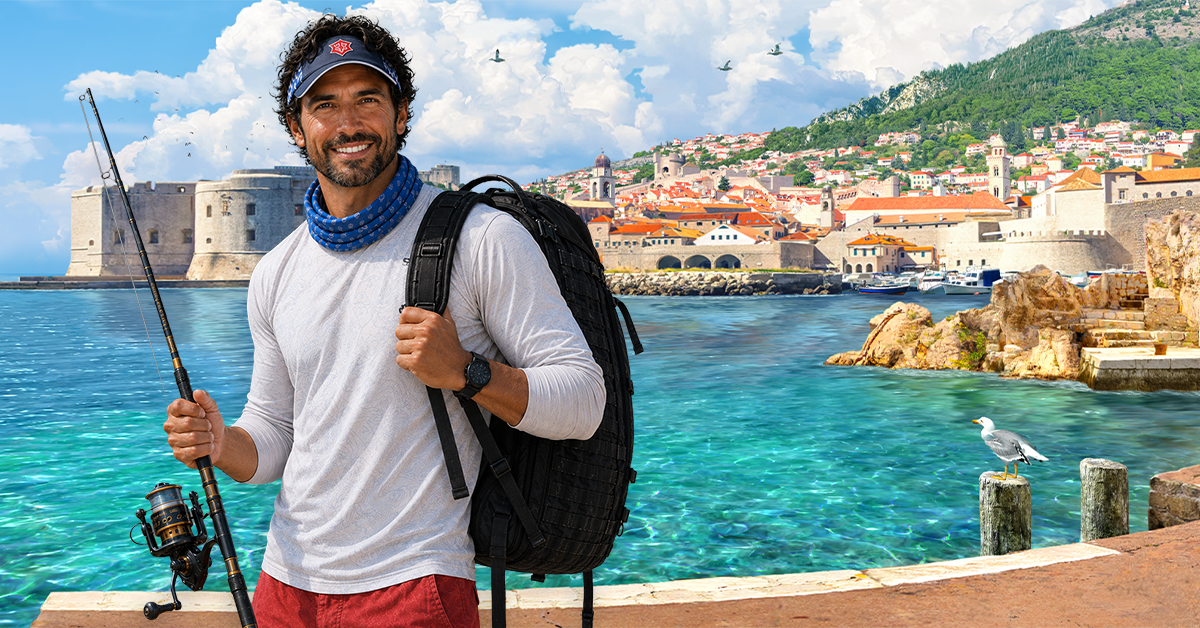
Everyone who arrives in Dubrovnik looks up. The walls, the rooftops, the cable car, the spots where they filmed that TV show – the city has been photographed from every angle a drone can reach. Fair enough. But you’re an Angler, so do the opposite: walk past the crowds to the edge of the old port and look down.
You can see the bottom. That’s the first thing that strikes anyone who fishes here. And it’s the reason our newest fishery works the way it does.
Water that hides nothing
Three facts about the sea below Dubrovnik, and every one of them changes how you fish it.
It’s salty. The Adriatic sits at around 38‰ – noticeably saltier than the open Atlantic and worlds apart from brackish water like the Baltic. Salt like that shapes everything that lives in it, down to the smallest goby.
It’s clear. In places you can make out shapes 30 or even 50 meters down. Sounds like a postcard, fishes like a problem: in water this transparent, the fish sees you long before you see it. Real Adriatic anglers go light on the line and long on the cast for a reason.
It gets deep fast. There’s no lazy shelf here. The karst coastline drops away steeply, so genuinely deep water starts within sight of the shore. One more local oddity: freshwater springs, called vrulje, vent straight out of the seabed – cold fingers of mountain water pushing up through the salt.
Shallow, clear, and suddenly deep. That’s the layout. Now the residents.

The locals
Start at the rocks. The Lokrum cuckoo wrasse is named after the island a short ferry ride from the old port, and it carries the strangest resume in the shallows: females of this species can change sex and become males, a switch that takes around 7 months. Nearby hunts the white seabream, a rocky-bottom regular with incisor-like teeth at the front of its jaws, built for picking prey straight off the stones. The saddled seabream patrols the same shallow coastal water and holds a quiet distinction: it’s the only member of the Oblada genus. One fish, one branch of the family tree.
Look closer at the broken ground between the rocks and you’ll find the tentacled blenny. It lives among scattered stones and sparse weed, and the adults spend most of their time hiding in crevices – in water this clear, hiding is a survival skill.
Then lift your eyes to open water. The blotched picarel moves in schools and picks small invertebrates off the bottom, while the round sardinella – one of the largest members of its genus – forms the kind of big, flashing schools that make you forget what you were actually casting for.

That’s day 1. What waits past the drop, and what’s buried in the sand, stays a surprise: new fish surface throughout the week, and some of them you won’t see coming.
Cast where the postcard ends
Dubrovnik joins our Mediterranean neighborhood – if you’ve fished Gibraltar, Madeira, or the Azores, you know the family. This one is the clear-water specialist of the bunch.
One more thing before you cast: Dubrovnik isn’t arriving the usual way. Instead of the familiar weekend release, this launch stretches across a full week – starting today.
Load up, pick your spot below the walls, and find out what 38‰ of salt and 50 meters of visibility do to your technique. And if your tackle box needs a refresh first, the TSG.STORE has you covered.
The city is beautiful. The water is better. See you down there, Anglers!