




Tierra del Fuego and how our worlds’ end
Our fishing world expands as we reach Tierra del Fuego in South America, the newest fishery in Fishing Clash. In today’s article, we’re finding a connection between the ways seafarers approached Tierra del Fuego over the centuries and the hardships we face in our own life journeys. Some places really seem like the end of the world, Anglers. Time to see if the horizon ahead is truly an end!
At the edge of the map
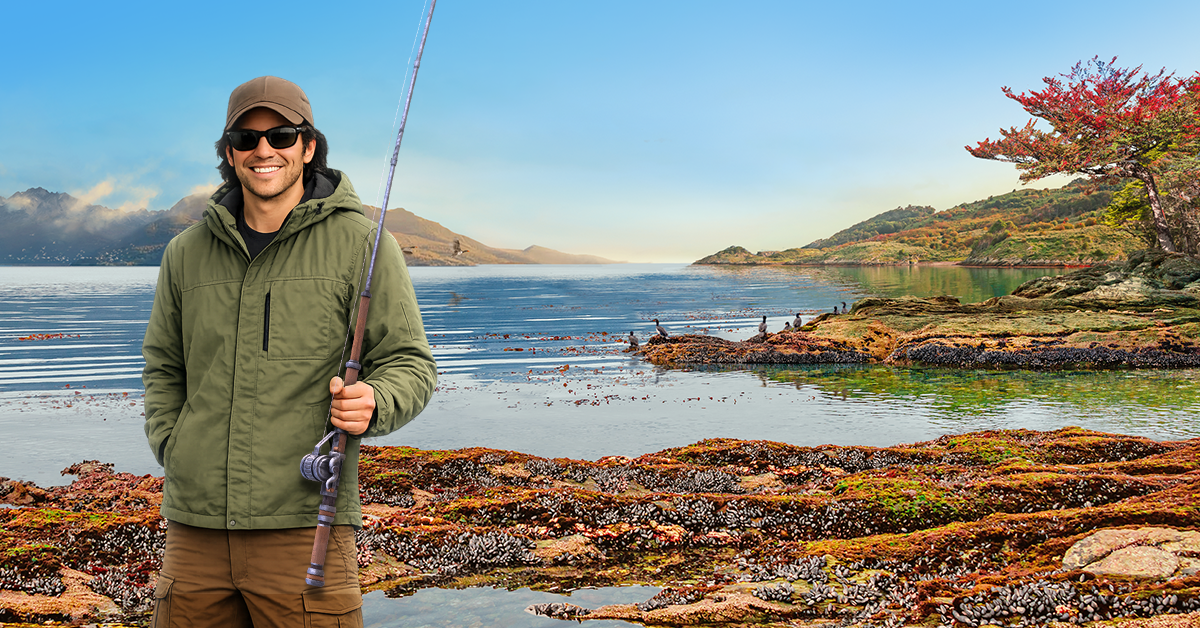
Tierra del Fuego is an archipelago at the southern tip of South America, where the continent breaks apart into islands, channels, and wind-beaten coasts. Separated from the mainland by the Strait of Magellan and shared by Argentina and Chile, the region includes the large Isla Grande de Tierra del Fuego along with numerous smaller islands extending toward Cape Horn. It’s an area so distant on our maps that, for centuries, it has been nicknamed “the end of the world.” Despite how edgy, cool, and marketable it sounds, the name never accurately described Tierra del Fuego’s position in the context of human travel. After all, exploration never truly ends, and the way our approach to the archipelago has evolved over the centuries stands as proof of humanity’s unyielding spirit of adventure.
Historically, many people were drawn to the region shaped by a cold climate and defined by landscapes that shift from mountains, forests, and peatlands in the south to more open steppes in the north. Tierra del Fuego’s remote location and treacherous waters have cemented its place in the history of maritime navigation and exploration. These days, beyond the symbolic echoes that still surround Tierra del Fuego, the archipelago is known for its distinct natural character and its role as a gateway to the far southern seas and Antarctica. For us, fishing enthusiasts well accustomed to remote areas and solitude, Tierra del Fuego serves as a metaphor for a different kind of challenge. An exploration that never truly stops, even though at times it may feel like reaching the end of our world: the journey of self-discovery through crisis. A journey that we don’t always embark on by choice.

When a world comes to an end
In everyday language, when saying that our world is ending, we usually have a great shift in mind, one that’s sometimes unexpected and often turbulent. A change that isn’t merely a choice of grandiose words, but a harsh truth describing the moment. It’s something that marks the end of a chapter or a point of no return. These world-ending changes include getting laid off, divorce, loss of a loved one, and other situations over which we either have little or no control at all. Moments when our world truly ends. Yes, we can sometimes fight back, and sometimes even rebuild. But there are times when we simply have to face the loss, the grief, and its weight. “If you can’t change the situation, change yourself,” goes the saying. If that change is considered through the lens of kindness, it may invite us to stop fighting and resisting. Something that at times seems even more courageous and demanding than the fight itself. It’s the attempt to welcome the full magnitude of the pain and the unknown ahead: a new, different world that’s awaiting our crossing.
Tierra del Fuego, and the ways it was historically approached, can provide unexpected lessons during difficult times. In the 16th–17th centuries, the archipelago was of great significance because sailors sought to navigate it in search of routes between oceans – they treated it as an obstacle to be overcome. In the 19th century, empires and scientists were trying to map and understand it. In the 20th century, it was tied to Antarctic operations and southern navigation. Finally, in the 21st century, Tierra del Fuego was established as a gateway, a logistics hub, and a controlled expedition region.

The shifts in how the archipelago was approached over the centuries can serve as a guide for dealing with adversity. They seem to form a pattern that we can also recognize in a journey through crisis, a path that’s ultimately one of growth. First, we face a difficulty, but we stumble nonetheless; we either actively avoid the problem or engage with it in ways that accomplish nothing. Then we try to observe the issue, get to know it better, map its edges, and organize around it to the best of our ability. Once we become familiar and work with the obstacle, it stops being one – this is the third stage, where the usefulness of Tierra del Fuego became apparent for Antarctic exploration. Finally, we have the fourth stage, something we can call integration: we no longer work around the difficulty, but alongside it; at this point, the issue can even become a leverage point, a kind of strength. Even if we solve it and leave it behind, the realization that at one point in our lives we managed to face something dire, devastating, or, indeed, world-ending, can become a source of pride, a reminder that sometimes what seems like an end is, in fact, a transition. But admitting with confidence that something initially world-ending was also a moment of learning can only be done once we make it through to the other side.
From obstacle to passage
What the history of navigation through Tierra del Fuego seems to point to, within the context of human growth, is that nothing truly ends; rather, it changes form. This is something highly experiential and not at all apparent when we’re still in the woods. Every person on this earth will go through a crisis, experience a tectonic shift that changes their known landscape, wake up in the middle of their dark night of the soul, as it’s poetically described. Our worlds, as we know them, will reach their ends, whether we want that to happen or not. While there’s little preparation that can be done beforehand, a useful tool is learning how to return to the present moment, the here and now. The past is usually what has gotten us into the difficulty we’re currently facing, and the future is unknown by default, so the present moment can be a reliable source of assurance and a steady way to ground ourselves, to connect to our bodies and the people around us.
What’s also useful when facing a crisis is to think of the smallest possible next step we can take, especially since thinking about the next week, day, or even hour can be debilitating and paralyzing as it’s inviting a greater scale into consideration (something we’re rarely prepared to face even on our best days!). So, what could be our next smallest step? Taking a long, slow breath is usually good advice, regardless of the problem we’re facing. In some cases, the next step would be taking a walk; in others, making that phone call we’ve been avoiding, or asking our friends for help. Of course, there’s no one-size-fits-all solution for these matters, since not only are our challenges distinct, but so are the possibilities available and the questions that need answering. However, once we allow a moment of stillness, we usually know what to do next.
But if even the tiniest effort feels overwhelming, can we dismantle the action into smaller, manageable chunks? Finding a new job may seem insurmountable at times, yes, but eating a sandwich so that we can get the energy to browse our career options for 15 minutes? Now that’s more doable. It all depends on the situation we’re facing, but it’s always worth remembering that whatever it is, we’re never alone. There are goodhearted people willing to help in our crisis – those who have managed to survive and those, just like us, going through it right now. Asking for and finding help is not only smart, but it’s an act of courage that has nothing to do with weakness; it’s a type of strength, an act of responsibility. Something to be praised and supported. Always.
A journey never ends
Our arrival in Tierra del Fuego, the end of the world’s map, definitely doesn’t conclude our fishing journey, as there’s an entire world of beautiful places to fish in – ones we’re still eager to visit! The fishing spots we find in Fishing Clash always seem to have plenty to teach us through their atmosphere, ambiance, and culture, often in unexpected ways, like the maritime exploration of Tierra del Fuego does. Despite any hardships life throws at us, we try to remain calm and patient, as true Anglers always do. If a moment’s peace is just what we need right now, why not check out the new fishing spot, Tierra del Fuego, and reel in some beautiful fish at the world’s end?